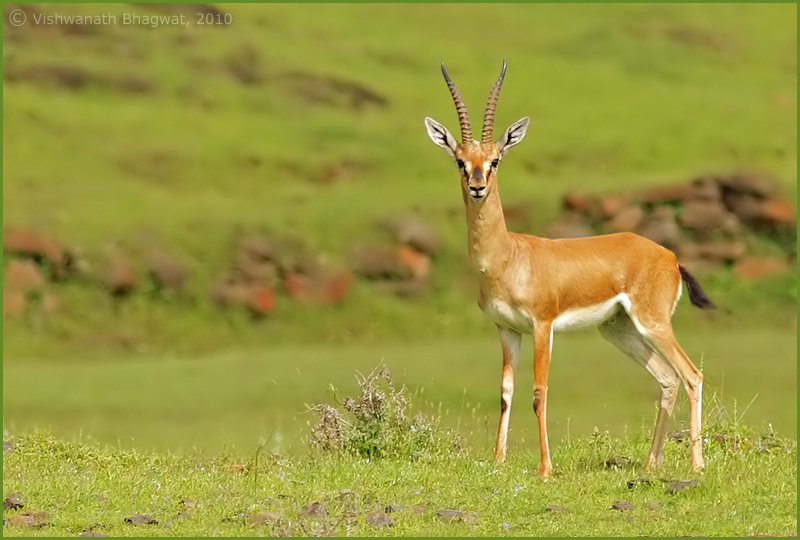
CHOWSINGHA (TETRACERUS QUADRICORNIS)


SCIENTIFIC CLASSIFICATION:
Kingdom : Animalia
Phylum : Chordata
Class : Mammalia
Order : Artiodactyla
Family : Bovidae
Genus : Tetracerus
Species : quadricornis
COMMON NAME : CHOWSINGHA
SCIENTIFIC NAME : TETRACERUS QUADRICORNIS
IMPORTANT FACTS
Coat color:Red
Shoulder height90 to 100 cms.
Body length:     150 to 225 cms.
Weight:70 to 120 kg
Life span:10 -  15 years
Adulthood:2 - 2.5 years
Gestation period150 - 180 days
Litter size1
  • HABITAT
  •  
  • RANGE
  •  
  • DIET IN WILD
  •  
  • DIET IN ZOO
Plain grasslands, open jungles and Tropical woodlands.

CHINKARA (GAZELLA BENNETTI)


SCIENTIFIC CLASSIFICATION:
Kingdom : Animalia
Phylum : Chordata
Class : Mammalia
Order : Artiodactyla
Family : Bovidae
Genus : Gazella
Species : bennetti
COMMON NAME : CHINKARA
SCIENTIFIC NAME : GAZELLA BENNETTI
IMPORTANT FACTS
Coat colorReddish-buff color, with smooth, glossy fur.
Shoulder height60 - 85 cms.
Body length      75 - 125 cms.
Weight25 - 35 kg
Life span10 - 12 years
Adulthood2 - 2.5 years
Gestation period160 days
Litter size1
  • HABITAT
  •  
  • RANGE
  •  
  • DIET IN WILD
  •  
  • DIET IN ZOO
Plain grasslands, open jungles and tropical woodlands.

LEOPARD CAT FELIS (PRIONAILURUS) BENGALENSIS


SCIENTIFIC CLASSIFICATION:
Kingdom : Animalia
Phylum : Chordata
Class : Mammalia
Order : Carnivora
Family : Viverridae
Genus : Felis (Prionailurus)
Species : bengalensis
SCIENTIFIC NAME : FELIS (PRIONAILURUS) BENGALENSIS
IMPORTANT FACTS
Head and body length44 – 107 cm.
Weight3 – 7 kg.
Tail length15 – 44 cm.
Litter size1 - 4
Gestation period56  days
Life span12 – 13 years

  • HABITAT
  •  
  • RANGE
  •  
  • DIET IN WILD
  •  
  • DIET IN ZOO
The habitat of this cat is forests - subpolar coniferous forests as well as tropical rainforests. It lives close to water courses and may be found in the heights up to 3000m. The leopard cat can climb trees skilfully. It is able to swim, but will seldom do so.

  • RANGE
  •  
  • DIET IN WILD
  •  
  • DIET IN ZOO
North Korea and the Amur basin and as far south as Bali, the leopard cat’s range extends towards Pakistan through northern India, the southern Himalaya, Bangladesh, Burma, and Indo-China. They are found on the Philippines, Borneo and Java and several islands near Japan.

  • DIET IN WILD

  • DIET IN ZOO
  • Leopard cats like most felids are opportunists, and they prey on hares, rodents, reptiles, moles, insects, amphibians, game birds, fish, mouse deer and the fawns of roe deer. Grass and eggs may supplement their diets. They are known to raid poultry and to tackle aquatic prey in the water.

    WHITE BUCK (ANTELOPE CERVICAPRA)


    SCIENTIFIC CLASSIFICATION:
    Kingdom : Animalia
    Phylum : Chordata
    Class : Mammalia
    Order : Artiodactyla
    Family : Bovidae
    Genus : Antelope
    Species: cervicapra
    COMMON NAME : WHITE BUCK
    SCIENTIFIC NAME : ANTELOPE CERVICAPRA
    IMPORTANT FACTS
    Coat colorWhite  in color
    Body length75 - 125 cms.
    Weight25 - 35 kg
    Life span10 - 15 years
    Adulthood2 to 2.5 years     
    Gestation period150 - 180 day
    Litter size           1
    • HABITAT
    •  
    • RANGE
    •  
    • DIET IN WILD
    •  
    • DIET IN ZOO
    They like to live in open grassland, dry thorn and scrubland. They like to be in herds about 20 to 30 individuals. A herd generally inhabits around 200 to 300 acres of land. A dominant male marks the territory by shifting and pawing the ground and urinating and defecating at established piles.

    • RANGE
    •  
    • DIET IN WILD
    •  
    • DIET IN ZOO
    Originally spreaded over large tracts of India (except in North East India).Today the White buck population is confined to areas in Punjab, Rajasthan, Haryana and Gujarat with a few small pockets in Central India. Its original habitat is open plain and not dense jungles. On the open plain, the White buck is one of the fastest animals and can outrun most predators over long distances.

    (a) Grasses
    (b) Green leaves 
    (c) Buds of flowers and Fruits

    BLACK BUCK (ANTELOPE CERVICAPRA)


    SCIENTIFIC CLASSIFICATION:
    Kingdom : Animalia
    Phylum : Chordata
    Class : Mammalia
    Order : Artiodactyla
    Family : Bovidae
    Genus : Antelope
    Species : cervicapra
    COMMON NAME: BLACK BUCK
    SCIENTIFIC NAME: ANTELOPE CERVICAPRA
    IMPORTANT FACTS
    Coat color      Faddish black, knees are white in color
    Shoulder height60 - 85 cms.
     Body length:  75 - 125cms.
    Weight40  kg.
    Life span10 – 15 years
    Adulthood2 – 2.5 years
    Gestation period160 days
    Litter size1
    • HABITAT
    •  
    • RANGE
    •  
    • DIET IN WILD
    •  
    • DIET IN ZOO
    They like to live in open grassland, dry thorn and scrubland. They like to be in herds about 20 to 30 individuals. A herd generally inhabits around 200 to 300 acres of land. A dominant male marks the territory by shifting and pawing the ground and urinating and defecating at established piles.

    • RANGE
    •  
    • DIET IN WILD
    •  
    • DIET IN ZOO
    Originally spread over large tracts of India (except in North East India). Today the Black Buck population is confined to areas in Punjab, Rajasthan, Haryana and Gujarat with a few small pockets in Central India.

    (a) Grasses
    (b) Green leaves 
    (c) Buds of flowers and Fruits